The weight that sits in your chest
Sometimes the heaviness arrives without any warning. You wake up, and for no clear reason, the world feels impossibly heavy, almost suffocating. Nothing is technically “broken.” Your heart just refuses to move.
I know this feeling well. There was a stretch of my life when I pushed myself until I hit a wall — I burned out completely, I couldn’t deliver the results I expected of myself, and I had no idea how to find a way forward. I spent a lot of nights wondering if I’d ever make it out, standing still in the dark with no end in sight. I know the weight of that kind of unexplained stagnation better than I’d like to.
If you’re in that dark place right now, the way I once was, I want you to know: I see you, and I understand the weight. There’s no need to rush toward answers. For now, let’s just sit here together in the quiet, and wait for whatever light eventually shows up.
Today’s Words
Чем темнее ночь, тем ярче звёзды.
“The darker the night, the brighter the stars.”
— Fyodor Dostoevsky · Russia · 1846
Written a year before his own darkest night
Dostoevsky wrote this line in his early novel White Nights, published in 1848. He was twenty-six. A year later his life came apart — he was arrested for belonging to a political group, sentenced to death, and marched to the execution site before a last-minute reprieve arrived. He then spent four years in a Siberian prison camp. Once you know that, the line reads completely differently. He wasn’t writing poetically from a comfortable desk, at a safe distance from anything real.
He would go on to understand darkness in the most literal, terrifying sense a person can. And still, this small image — stars burning brighter against a darker sky — stayed with him from before any of it happened. Looking back, it’s almost as if he’d written something he would later need for himself.
Why the darkness makes the stars visible at all
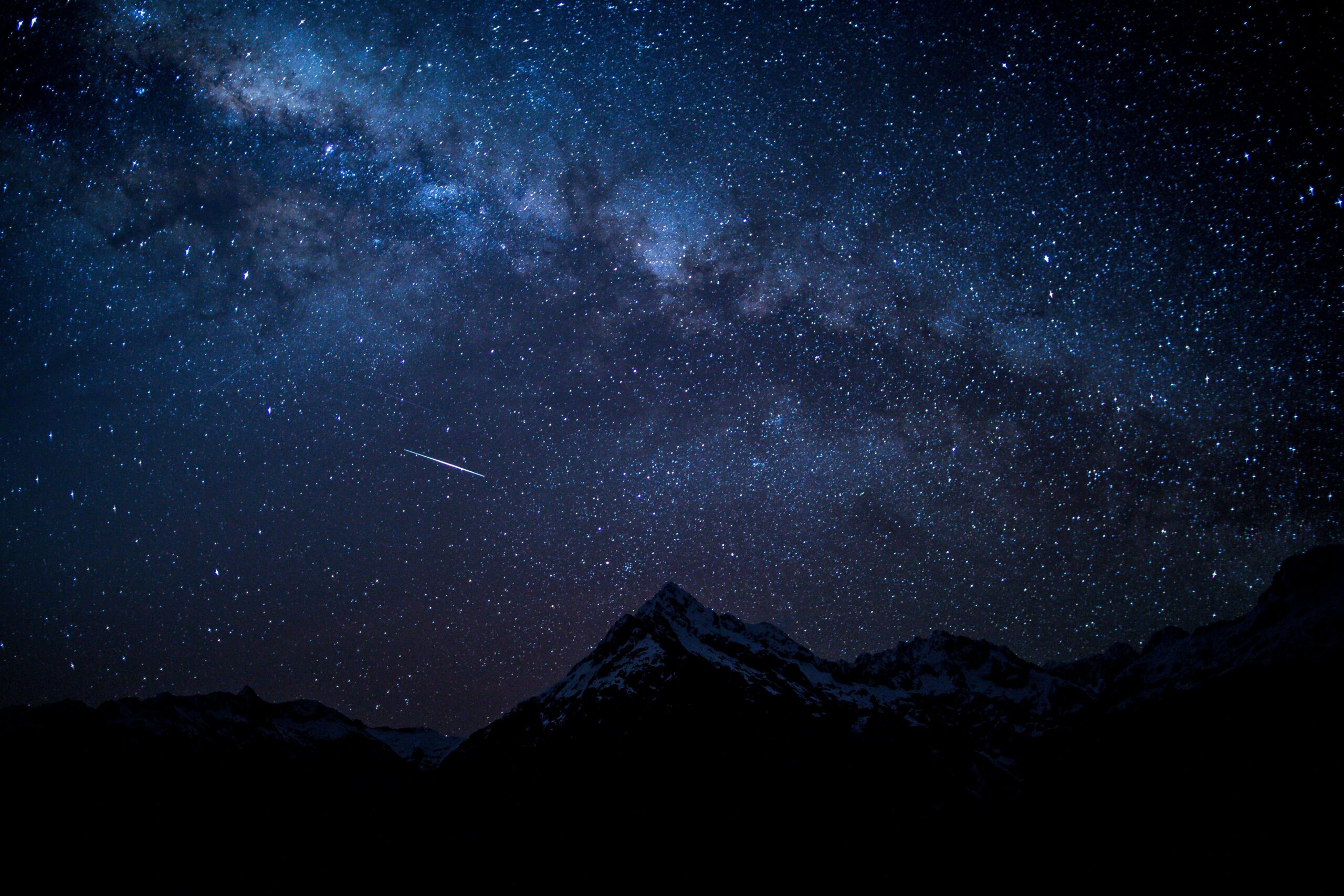
There’s something close to scientific fact in this image, which might be part of why it’s lasted. Astronomers will tell you plainly: you need a dark sky to see stars clearly. Under city lights, most of them vanish. Go somewhere quiet and dark, though, and the whole sky opens up into something enormous.
I think Dostoevsky was reaching for something close to that. He isn’t promising that suffering ends soon, and he isn’t offering any guarantee. It reads more like a plain observation — that the same conditions making things hard are sometimes the conditions that let certain things become visible.
When life is easy, the small kindnesses around us tend to slide right past. We’re moving too fast to notice them. But when the heart is heavy, a friend’s message, a warm cup of tea, an offhand kind word from a stranger — these register differently. They stand out. I’ve watched this happen in my own life more than once.
One evening I was worn out from worrying about my son, and nothing about the situation had actually improved. Someone just asked, “How are you doing?” That small question stayed with me the rest of the day. On an easier day I might have forgotten it within the hour. That day, it felt like one of Dostoevsky’s stars. Looking back, the moments I’ve been most moved by small gestures were almost always the hardest ones.
There’s a quieter idea folded into this quote too — that darkness doesn’t last. Night implies a morning somewhere ahead of it, even if Dostoevsky never says so outright. I think that restraint is deliberate. He doesn’t rush toward comfort. He offers the image and lets you sit with it for as long as you need to.
The first time I read this quote, it didn’t feel like it was trying to comfort me. It felt more like permission — permission not to force myself to feel better on any particular schedule. I suspect that’s why it’s stayed with so many people over so many years. It doesn’t erase the darkness. It just points out that even in hard seasons, we sometimes start noticing things we would have missed otherwise.
For anyone in grief, or in a hard season, or just worn thin, this kind of language can land more honestly than “it’ll be okay.” It doesn’t pretend the dark isn’t there. It looks straight at it, and then adds: even here, something is still glowing.
Some nights are simply dark, and that’s fine
I won’t tell you everything is going to get better, because I don’t know your story. Sometimes those words, however well-meant, land more like pressure — like you’re supposed to feel hopeful right now, and something’s wrong if you don’t.
Nothing is wrong with you. I used to believe encouragement had to sound upbeat to count. What I’ve come to think instead is that most people don’t need answers first. They need someone willing not to rush them. That’s what I appreciate about this quote. It doesn’t hurry anyone toward hope. It just stays close for a while.
Maybe this quote finds you at exactly the right moment. Or maybe it sits quietly somewhere in the back of your mind and comes back on a night you actually need it. Either way is fine — words often work on a delay, arriving right when we’re finally ready to hear them.
If your chest feels heavy tonight, I hope you can find even one small star. One tiny thing that glows, even faintly.
From Japan —Night blossoms and a question worth asking
There’s a tradition in Japan called yozakura — viewing cherry blossoms at night. In daylight the blossoms are lovely, ordinary-beautiful. At night, lit softly by lanterns or moonlight, they turn into something else — a little haunting, almost sacred. I stood under the trees once, very late, after a hard week. The darkness made the pale petals glow in a way the afternoon never could. The people around me had gone quiet. There was some shared understanding in the air, maybe, that beauty shows itself differently once the light is gone. Dostoevsky’s stars and Japan’s night blossoms feel like distant cousins to me — different images pointing at the same gentle idea.
When I come across an old quotation now, I try not to ask whether it’s literally true. I ask something quieter instead: what does this sentence help me notice today? Some days the honest answer is nothing. Other days, one sentence changes how I carry an ordinary evening. Maybe that’s the actual job of wisdom — not to solve our lives, but to help us see them a little differently for a while.
If these words stayed with you, Dostoevsky’s original work holds even more of this — a single quotation is often just the beginning of a much longer conversation.